How to Find a Watch Model Number From Dial and Case-Back Clues
Learn how to find watch model number from dial and case-back clues, what photos can prove, and the safest next steps before you rely on an ID.
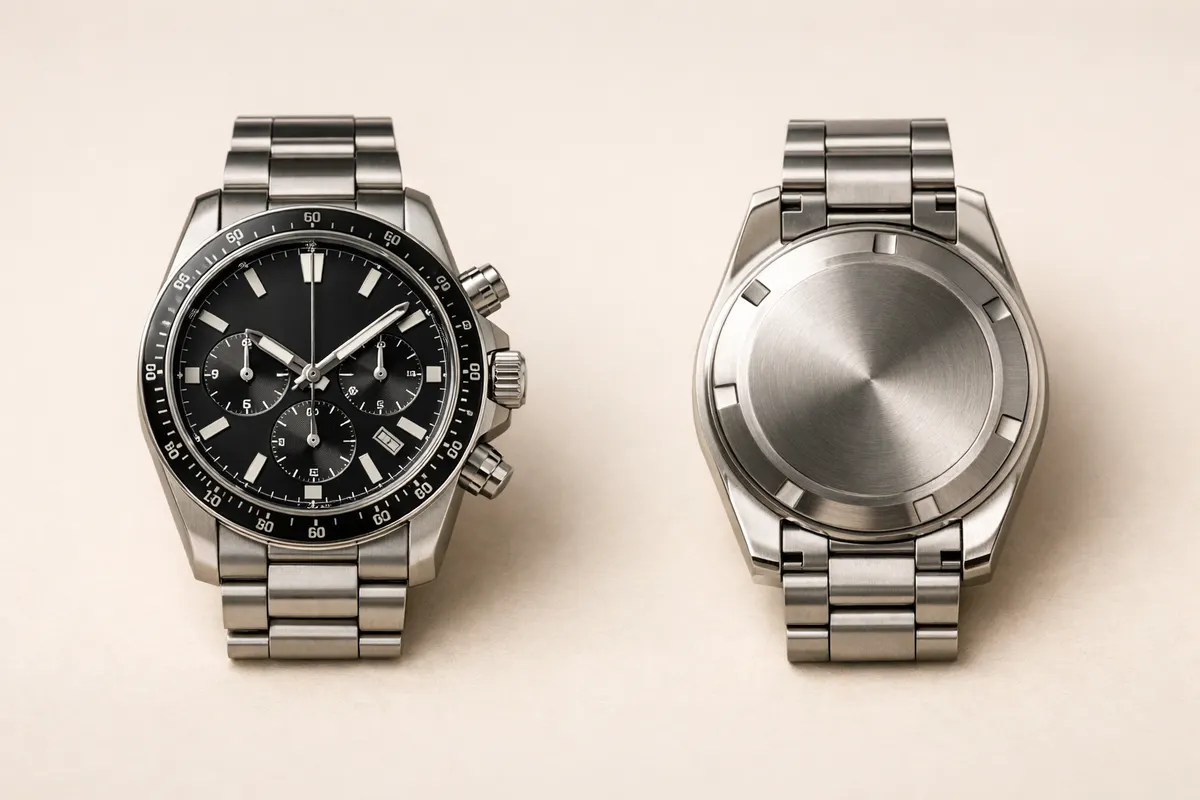
Quick answer: how to find a watch model number
How to find watch model number starts with transcribing every visible marking on the dial and the case back, then turning those clues into targeted searches. Begin by photographing the watch from the front, the case back, and the edges where maker marks or reference codes often live. Note brand names exactly as they appear, any reference or caliber numbers, and distinctive visual features such as subdial layout, bezel type, or unusual hands.
A high-confidence ID usually needs a combination of text clues (a reference or case code) and visual-match evidence from reliable sources: brand archives, manufacturer documentation, or consistent listings from reputable dealers and auction houses. When text clues are missing or contradictory, systematically compare visible specifications—case shape, lug style, dial printing, and bezel markings—until a consistent candidate emerges. Keep serial numbers private and avoid opening the case: photos and surface markings are the safest first pass.
What it means to find a watch model number
Finding a watch model number means extracting the label the manufacturer used to identify a specific configuration of case, dial, movement, and bracelet. A model number (sometimes called a reference number) groups a family of watches that share core design traits; it is not the same as a unique serial number assigned to a single example. For many modern and vintage brands, the reference appears as a stamp on the case back, an engraving between lugs, or catalog listings that pair text codes with photos.
Practically, the goal when you search is to match the watch you see to a documented model — not to prove provenance or value from a single photo. An accurate model-level ID helps you find production dates, factory options, and typical market listings. That information supports further checks with brand service centers, trusted sellers, and specialist forums when you need confirmation beyond what images provide.
Key clues for finding a watch model number
Start with the dial. Text printed on the dial can include the brand, line name, depth rating, chronograph subdial labels, or special edition marks. Exact capitalization, spacing, and font style matter: a full-line name like “Omega Seamaster 300” or “Heuer Autavia” narrows searches dramatically. Photograph the dial straight-on with even light to capture legible printing and any small words near the bottom or under subdials.
Next, inspect the case back and lug area. Case-back engravings often carry a reference number, model code, or manufacturer logo. Some branded watches place a reference on the outside of the case back; others stamp it between the lugs (the narrow area where the strap meets the case). Remove the strap only if it’s necessary and safe to do so—do not open the case. If you must share images, redact or crop serial numbers; those are unique identifiers and should not be posted publicly.
Note movement and crown cues visible without opening the case. The crown’s shape, signed logo, or screw-down mechanism can indicate a brand family and era. Visible rotor markings or display-caseback inscriptions can also include caliber numbers; if a movement designation is readable through a display back, transcribe it exactly. Again, do not pry the case open: rely on what is visible externally or through a transparent case back.
Measure and describe proportions and materials. Case diameter, lug width, bezel type (rotating, coin-edge, tachymeter), crystal profile (domed vs. flat), and bracelet clasp codes are all searchable attributes. Many reference lookups use a combination of a few precise specs plus a dial photo to find an exact model or a very close match.
- Dial text: brand, sub-brand name, depth rating, and any small legends.
- Case back: engraved reference codes, hallmarks, logos, or anniversary stamps.
- Between-lug area: reference or production codes stamped near spring bars.
- Crown/bracelet: signed crowns, clasp codes, end-link numbers, and unique fittings.
- Visual features: bezel markings, hand shapes, subdial layout, and lume plots.
- Dimensions: case diameter, lug-to-lug, and lug width measured or estimated.
Step-by-step: find a watch model number
Step 1 — Capture and transcribe: Take clear photos of the dial (head-on), case back, and the watch on its side to show the crown and thickness. Use neutral light and a plain background. Write down every visible word, number, and symbol exactly as they appear; small differences in spacing or punctuation can change a search result.
Step 2 — Prioritize unique text first: If you can read a reference or caliber number, start searches with those terms plus the brand name. If only general words are visible (for example, “Automatic” or a depth rating), pair them with visual terms such as bezel type or subdial layout in image searches and marketplace filters. Reverse image search tools and specialized watch databases can surface matching listings faster than a general web search.
Step 3 — Compare visuals and specifications: Assemble a short list of candidates from brand catalogs, dealer photos, auction archives, and collector forums. Compare case proportions, hand shapes, dial printing, and bezel details side-by-side. Treat consistent matches across independent, reputable sources as higher confidence; single marketplace listings or seller descriptions are weaker evidence unless they include a clear factory reference.
Step 4 — Narrow and verify: Once you have a likely model number, confirm details that are typically fixed for that reference—movement caliber (if publicly documented), lug width, crystal type, and manufacturing era. Use manufacturer websites, published catalogs, or trusted auction house records to cross-check. If the watch is important to verify (for sale, insurance, or service), contact an authorized service center or a well-regarded independent watchmaker for a professional inspection—without asking you to open the case yourself, they will advise the necessary next steps.
- Photograph: dial, case back, sides, bracelet clasp, and lug spring bars.
- Transcribe: copy every visible string of letters and numbers exactly.
- Search: brand + reference/caliber or brand + visual descriptor (e.g., “tropical dial,” “panda chronograph”).
- Cross-check: brand archives, auctions, and reputable dealer listings.
- Protect privacy: blur or crop serial numbers before sharing images publicly.
Examples of identifying a watch model number
Example 1 — Clear reference on the case back: A modern sports watch with a stamped code like “Ref. 1234.56” on the case back is straightforward. Search the brand name with that exact reference; official pages or dealer catalogs typically return the model sheet. Confirm visual match by checking dial color variants and bracelet options listed for that reference.
Example 2 — Dial-only clues: A vintage dress watch showing only the brand and “Automatic” requires visual comparison. Start with dial layout (single seconds vs. sub-seconds), hand shape, and case lugs. Look for the same dial printing and handset in period catalogs, auction records, or specialist vintage forums. When multiple candidates share similar names, case dimensions and movement caliber (if documented externally) usually resolve which reference fits best.
Example 3 — Partial codes and bracelet clues: Some watches lack an external reference but have clasp or end-link codes that point to a family of models. For instance, a signed clasp code plus a distinctive bezel style can cut a search down to a few references. Search the clasp code alongside brand and era terms, then match the visual traits to a likely reference. This method often yields a shortlist rather than a single definitive model, which is still useful for further verification.
- Stamped reference: search exact “Ref.” numbers with the brand for rapid confirmation.
- Visual-only vintage: match dial printing, hands, and lug style against catalog images.
- Bracelet/clasp codes: use metalwork markings to narrow family or era when references are absent.
Limitations when finding a watch model number
Photos and surface markings have limits. Wear, refinished dials, replaced bezels, aftermarket crowns, and re-brushed cases can mask original specs and lead to incorrect matches. Vintage watches are especially susceptible: dial refinishing or later hands can make a watch look like a different reference. Always treat a photo-based ID as provisional until corroborated by factory records, service paperwork, or an expert inspection.
Protect unique identifiers and avoid risky actions. Serial numbers identify a single watch and should not be publicized; blur or crop them before sharing images online. Do not open the case to read movement or inner-case stamps unless you are a trained watchmaker or the action is performed by a trusted professional. Opening a sealed case can void guarantees, damage water resistance, and cause irreversible changes.
When you have only partial or conflicting evidence, plan for verification steps. Ask for original boxes, warranty cards, or dealer receipts from a seller. For high-value pieces, request a professional service check or obtain an opinion from multiple independent experts. A confident model-level identification reduces, but does not eliminate, the need for provenance and condition verification when value or authenticity matters.
- Refinished or replaced parts can mislead visual matching.
- Serial numbers should be kept private—do not post them.
- Never open the case yourself; use a qualified watchmaker for internal inspection.
- Photo-based IDs are provisional; confirm with documents or professional checks for high-value transactions.
Related guides
Try the matching workflow on Find This Watch
After you collect clear dial and case-back photos and transcribe visible markings, continue to https://watchscanner.app/tools/find-this-watch to run a matching workflow. Use the app as a first pass to compare your evidence to known references, but remember that an on‑site inspection or manufacturer records are the final step for high-value or provenance-sensitive questions.

Frequently asked questions
Can I find a watch model number from just a dial photo?
Sometimes. A dial photo that clearly shows a brand name, line designation, or an uncommon dial legend can be enough to identify a model or narrow it to a small group. However, many references differ in case back markings, movement, or bracelet options that aren’t visible on the dial. Treat a dial-only match as provisional and follow up with case-back photos, measurements, or documentation to raise confidence before relying on the ID.
What should I avoid posting when asking for help identifying a watch?
Avoid posting full serial numbers or any paperwork that contains unique identifiers linked to ownership. Blur serials and certificates before sharing. Also avoid instructing someone to open the case; internal inspections should be done by authorized service centers or qualified independent watchmakers to prevent damage and preserve warranties.
Are bracelet and clasp codes reliable clues for model numbers?
Bracelet and clasp codes can be useful, especially when manufacturer patterns tie specific bracelets to particular references or eras. They are typically supporting evidence rather than definitive proof: bracelets are commonly swapped between models. Use clasp/end-link codes alongside dial and case features to narrow candidates, then confirm with other sources such as catalog images or auction records.
When should I get a professional inspection to confirm a model number?
Plan a professional inspection when the watch’s value, authenticity, or condition affects a sale, insurance, or service decision. If your photographic search yields conflicting results, or if matching parts suggest replacement components or refinishing, an expert can open the case safely, identify the movement, verify serials, and check for originality. Until then, rely on surface clues for identification and treat the result as provisional.